
The Hybrid Revolution: Why Loyalty is No Longer Either/Or
In the travel and transport sector of 2026, the debate between free and paid loyalty is settled: the winner is the Hybrid Model. We no longer ask customers to choose between a free membership and a paid subscription. Instead, we offer a “Freemium” architecture where the free tier serves as the foundational relationship and paid “extensions” act as high-performance boosters. This “As-Well” scenario allows a rail operator, an airline or hotel to maintain a massive database of casual travelers while simultaneously monetizing the high-frequency needs of the “Power User”.
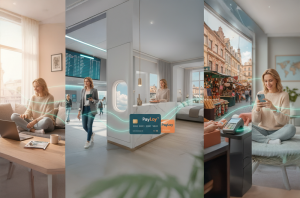
From a conceptual perspective, this shift represents the democratization of premium experiences. A traveler might hold a free base membership to collect miles for a family holiday, while simultaneously paying a monthly “Commuter Booster” fee to access fast-track security and lounge retail discounts during their work week. As consultants, we see this as a strategic masterstroke: it captures the “accidental traveler” and the “dedicated professional” within the same ecosystem. By layering paid options over a free core, brands create multiple entry points for loyalty, ensuring that no customer is left behind, yet every premium service is appropriately valued.
The Convenience Accelerator: Buying Time in a Frictionless World
The Psychology of the Shortcut: Status, Ego, and the Sunk Cost
The psychological allure of paid loyalty extensions lies in the human desire for instant gratification. Traditional loyalty is a marathon; paid extensions are a sprint. By allowing a member to “buy into” a higher tier or a specific set of privileges, brands tap into the Endowment Effect. Once a traveler pays for a “Gold Extension,” they feel a sense of ownership over that status. They didn’t just receive it; they invested in it. This creates a powerful Sunk Cost Fallacy: a member is significantly more likely to book with the same airline or use the same rail terminal to “validate” the monthly subscription fee they’ve already spent.
Furthermore, we must not underestimate the “Ego” component. Even if a tier is purchased rather than earned, the psychological benefits of exclusivity remain. Walking through a priority lane provides a dopamine hit of social proof. However, as experienced consultants, we emphasize that for this to work, the “Exclusivity Weight” must be balanced. The paid extension should feel like an “Upgrade,” not a “Standard.” The member must feel they have gained an edge over the general public. This “Purchased Prestige” ensures that even the occasional traveler can enjoy the psychological rewards of being a VIP, deepening their emotional tie to the brand through the very act of payment.
The Friction of Fairness: Navigating the "Paid vs. Earned" Conflict
Introducing paid extensions into a free program is not without risk. The primary challenge is the Perception of Fairness. Your Frequent Travellers may feel that their “earned” status is diluted if someone can simply buy the same privileges. This can lead to a “Mercenary” atmosphere where the emotional bond of the long-term fan is replaced by the transactional coldness of the subscriber. To avoid this, we recommend a clear “Value Hierarchy” where earned status always carries unique, “un-buyable” rewards.
Another risk is Subscription Fatigue. If a travel ecosystem offers too many paid “add-ons,” the customer may suffer from choice paralysis or feel “nickeled and dimed.” The author’s expert opinion is that paid extensions must be bundled into clear, high-value “Persona Packages” (e.g., The Business Pro, The Family Explorer). We must also guard against the “Mercenary Churn”: if the only thing keeping a customer is a paid subscription, they will leave the moment a competitor offers a cheaper shortcut. Authentic loyalty must still be nurtured through service excellence; a paid extension is a lubricant for the relationship, not the foundation itself.
The Architect’s Blueprint: Designing the Multi-Dimensional Program
The future of loyalty in the travel and transport industry is a multi-dimensional matrix. Success requires a sophisticated technology stack that can track a member’s dual status: their earned progress (long-term) and their paid benefits (immediate). This architecture allows for a “Liquid Loyalty” experience where the member can dial their engagement up or down. Perhaps they pay for a “Premium Extension” during a busy travel quarter and revert to the free base level during the holidays. This flexibility is what modern consumers demand: control, transparency, and value-on-demand.
Ultimately, the goal of the “As-Well” model is to maximize Customer Lifetime Value (CLV) by capturing every possible interaction, from a daily coffee at the station to a trans-continental flight. By balancing the “Logic of Convenience” with the “Magic of Exclusivity,” and protecting the “Sanctity of Earned Status,” travel brands can create a robust, recession-proof ecosystem. Paid loyalty is not a threat to traditional emotional connection; it is a modern tool to strengthen it. It provides the “Skin in the Game” that ensures the customer keeps coming back, not just because they have to, but because they have invested in being part of your world.
Conclusion
- The "As-Well" Strategic Shift: Paid loyalty isn't an oxymoron. It is a tool to monetize the "Shortcut Economy." By allowing members to pay for specific benefits (like lounge access or retail discounts), brands satisfy the modern consumer’s demand for immediacy while maintaining a broad base of casual users.
- The Psychology of "Skin in the Game": Paying for a subscription triggers the Sunk Cost Fallacy and the Endowment Effect. When a traveler pays for a tier extension, they feel a sense of ownership and are psychologically "locked in" to justify their investment, which significantly increases their frequency of spend.
- The Travel-Retail Synergy: Paid extensions are the "glue" that keeps a travel brand relevant in daily life. By integrating retail partners into the subscription (e.g., discounts on daily coffee or city shopping), the brand moves from being a "twice-a-year airline" to a "daily lifestyle partner."
- To remain competitive, loyalty operators must balance the Logic of Convenience with the Magic of Exclusivity. Protect the "sanctity" of earned status for your most frequent travelers while providing paid shortcuts for those who value their time more than their miles....